—— LVMH’s Largest Division Slumps as China Weakness Hits Louis Vuitton
1. LVMH’s Largest Division Slumps as China Weakness Hits Louis Vuitton
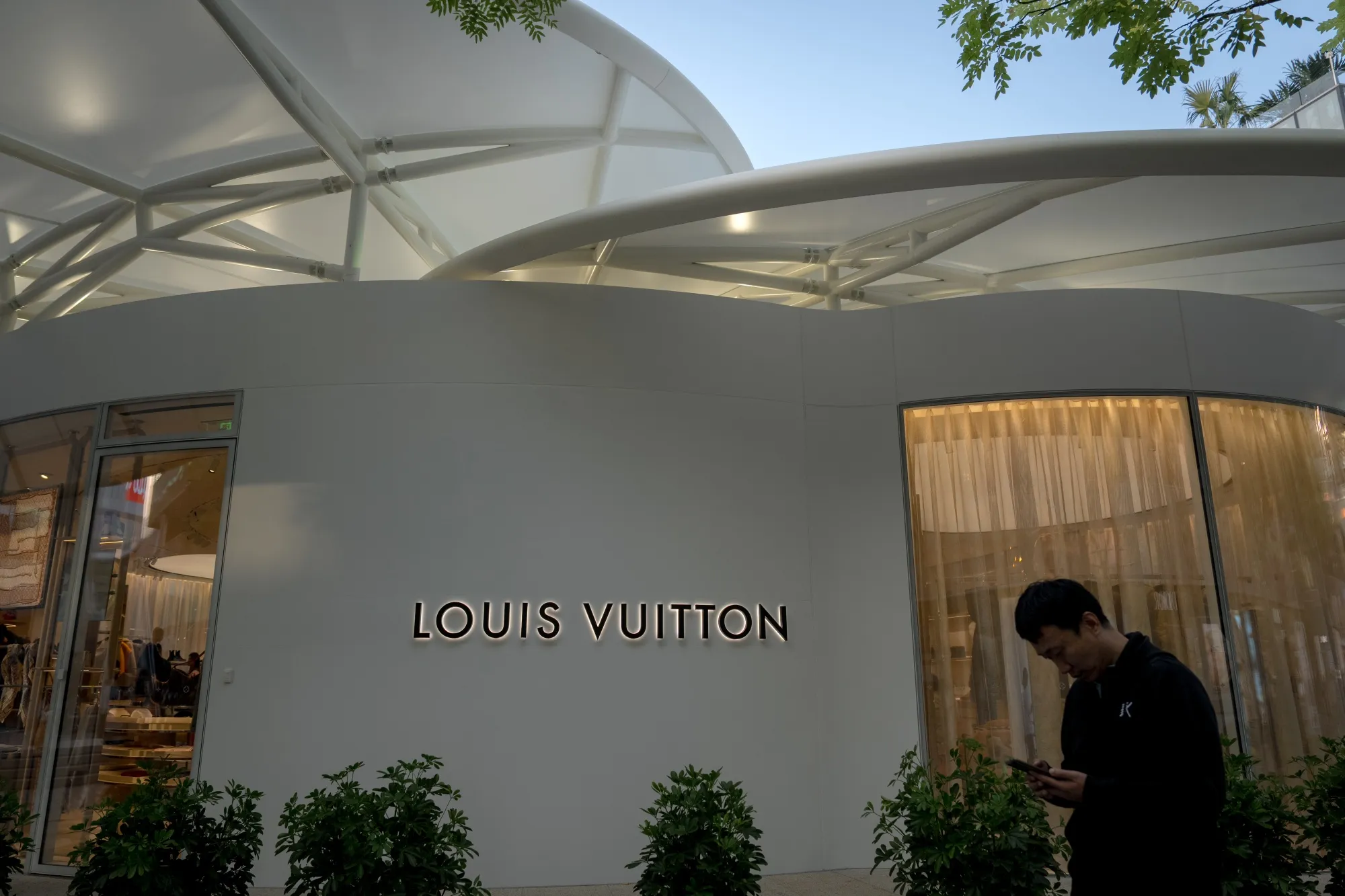
LVMH’s largest business division suffered a sharper-than-expected decline last quarter, as deteriorating conditions in China and a consumer backlash weighed on its flagship Louis Vuitton brand.
Organic revenue at the fashion and leather goods division fell 5% in the third quarter, LVMH Moët Hennessy Louis Vuitton SE said Monday. Analysts had expected a decline of just 1.57%.
Louis Vuitton has faced mounting pressure in China following a trademark dispute with local tea maker Molly Tea. Bloomberg reported last month that the luxury brand won the case, prompting a backlash from some Chinese consumers who viewed it as unfair for the world’s largest luxury group to take a much smaller domestic company to court.
Sales in the region that includes China fell 5% during the quarter, making it the only geographic market where LVMH recorded a decline. The company’s American depositary receipts dropped as much as 3.6% in New York after the results were released.
LVMH shares have lost more than 40% this year, putting the stock on course for its worst annual performance since the 2008 global financial crisis. Although the luxury sector as a whole is struggling with weaker demand, LVMH has been the worst performer among major luxury groups this year, with rival Hermès International also under pressure.
Expectations for a broader recovery in luxury spending this year have been undermined by sluggish demand in China, the prolonged conflict in the Middle East and weakening consumer confidence.
Group-wide sales rose 1% in the third quarter, also falling short of analysts’ estimates.
Bloomberg – LVMH Sales Slump at Key Unit on Weaker Demand in China
______
2. Nvidia-Backed Firmus IPO Collapses
In just 48 hours, Firmus Grid Ltd. went from a rising star of the AI data-center boom to one of the most striking IPO failures in recent memory.
The Nvidia-backed company had been positioning itself as a key beneficiary of surging investment in artificial-intelligence infrastructure. It was on the verge of one of Australia’s biggest-ever initial public offerings, seeking a valuation of $30 billion that would have placed it among the industry’s largest players. But the deal unraveled after US fund managers balked at the proposed price.
Through Tuesday evening in Sydney, the deal team kept hearing the same message from one fund after another: Firmus’ $30 billion valuation was simply too high, according to people familiar with the matter.
By Wednesday morning, it had become clear that the IPO would not proceed as originally planned. Bankers scrambled to find ways to salvage the offering, including cutting the price or reducing its size. Ultimately, the transaction collapsed.
The account is based on multiple conversations with people close to the situation, who asked not to be identified because the discussions were confidential. A Firmus representative declined to comment.
Signs of trouble had emerged earlier, when reports that existing shareholders would not be subject to an escrow agreement raised concerns that they could sell shares after the listing, potentially flooding the market with stock.
That development worried some investors, but optimistic messages about demand continued to reassure others that the offering could still succeed.

Bloomberg – Data Center Darling’s $30 Billion IPO Dream Crushed in 48 Hours
______
3. Target Denies Working With ICE After New York Shooting Sparks Backlash
Target Corp. denied cooperating with US immigration enforcement after a shooting during an operation in New York City prompted Representative Alexandria Ocasio-Cortez to criticize the retailer for allegedly allowing Immigration and Customs Enforcement agents to use its parking lots.
Ocasio-Cortez called for an independent investigation into Thursday’s incident and urged Target to stop making its Bronx properties available as “private staging sites for ICE.”
“Target opening up large, active retail parking lots for paramilitary activity is unacceptable and places the entire community at risk,” she said in a statement late Thursday.
Oscar Belgal, a 28-year-old Dominican man, was shot during what the Department of Homeland Security described as a targeted operation in the Marble Hill neighborhood of New York City. The incident prompted questions about the use of retail properties during immigration enforcement operations.
A Target spokesperson said Friday that the company has no cooperative agreements with ICE.

Bloomberg – Target Denies Cooperating With ICE After Shooting Near NYC Store
______
4. SpaceX Buys Wireless Spectrum, Moving Closer to US Mobile Market
SpaceX is taking a significant step towards expanding Starlink into the US consumer mobile market. The company has announced the acquisition of a portfolio of low-band wireless spectrum licences, sending shares of the country’s three largest mobile operators sharply lower and wiping about $45 billion from their combined market capitalisation. Shares of mobile network infrastructure operators, by contrast, surged as investors reassessed the potential shift in the competitive landscape.
According to the Financial Times, SpaceX said in a statement on Thursday afternoon that it was buying licences for up to 14 megahertz of paired spectrum in the 800MHz band. The acquisition marks a major step towards offering retail mobile services in the US, potentially extending SpaceX’s business beyond satellite broadband and into direct consumer mobile connectivity.
Shares of major US wireless carriers fell shortly after Wall Street opened on Friday. Verizon Communications, the country’s largest mobile provider by subscriber numbers, dropped 6.9 per cent. AT&T fell 8.4 per cent, while T-Mobile US declined 9.6 per cent.
For SpaceX, a move into mobile contracts would rank among its most significant commercial expansions since the launch of Starlink. The satellite network now provides high-speed internet access in more than 160 countries and territories. Expanding into consumer mobile services could broaden its reach and bring the company into more direct competition with traditional telecom operators.
SpaceX chief executive Elon Musk described the deal as a “very big deal” in a post on X. Shares in SpaceX rose 1.4 per cent on Friday morning, adding about $30 billion to the company’s valuation.
In contrast to the losses among mobile carriers, shares of mobile network infrastructure operators rallied. Crown Castle rose 10.2 per cent, American Tower gained 7.1 per cent and SBA Communications advanced 6 per cent.

Financial Times – US telcos shed $45bn in value after SpaceX announces spectrum purchase
______
5. US Income Inequality Eases, but Wealth Gap Remains Wide
Income inequality in the US declined over the past three years, but the change did little to narrow the country’s persistent wealth divide, according to new Federal Reserve data. Lower-income families recorded modest income gains, while incomes fell among those at the top of the distribution. Meanwhile, wealth remained heavily concentrated, and a growing share of households faced substantial debt burdens.
The Fed’s Survey of Consumer Finances, released on Friday, showed that overall income rose modestly for lower-income families in the three years through 2025. Incomes declined among the highest earners, whose earnings tend to include a larger share of more volatile sources, such as capital gains and business income.
The wealth gap, however, remained pronounced. Median net worth among US households increased 2 per cent to $215,900, while average net worth climbed 7 per cent to $1,241,500. The larger increase in the average than in the median highlights the concentration of wealth among a relatively small share of households. On average, families in the top 10 per cent of the income distribution held 56 times as much wealth as those in the bottom 20 per cent.
Conducted every three years, the survey is widely regarded by economists as one of the most comprehensive sources of data on American households’ financial well-being, covering wealth, income, debt and financial security. The latest findings also help explain the divergence between a stock market that has repeatedly reached new highs in recent years and consumer sentiment measures that have remained near historically low levels.
The share of families that owned stocks fell to 56 per cent in 2025 from 58 per cent in 2022. That decline came even as the S&P 500 rose nearly 80 per cent over the same period. The Fed said families in the bottom half of the income distribution “accounted for nearly all of the overall decline in participation” in the stock market.

Bloomberg – US Pay Inequality Improves, Wealth Gap Widens in Fed Report
______
6. Delta Cuts Full-Year Earnings Outlook as Fuel Costs Climb
The rising cost of jet fuel is putting renewed pressure on the US airline industry as the war in the Middle East continues with little sign of easing. Delta Air Lines cut its full-year earnings outlook on Friday and said it expects to absorb about $6 billion in additional fuel costs this year. The revision highlights the challenges facing the broader industry, particularly smaller and less profitable carriers with fewer ways to cushion the impact of higher energy prices.
The Atlanta-based airline said it expects adjusted earnings of $5.10 to $5.60 a share in 2026, well below the $6.50 to $7.50 range it reaffirmed in July. The new forecast is broadly in line with the Bloomberg-compiled analyst estimate of $5.44 a share.
Delta expects fuel costs to be about $6 billion higher this year than in 2025. With the conflict in the Middle East showing no clear signs of abating, airlines face continued uncertainty over one of their biggest operating expenses.
Despite the higher costs, Delta Chief Executive Officer Ed Bastian said he expects demand for air travel to remain resilient, even if ticket prices stay elevated for an extended period. He pointed to the strength of the US economy as a key source of support for travel spending.
“The market has accepted these price points,” Bastian said. For wealthier consumers, he added, “travel is one of their very top priorities.”
Delta shares fell 2.5 per cent to $80.09 as of 10:46 a.m. in New York. Rival carriers United Airlines Holdings Inc. and American Airlines Group Inc. each fell about 2 per cent.
Delta, the first US carrier to report quarterly results, is relatively well positioned to withstand oil-price shocks. It owns an oil refinery and has a business mix that places greater emphasis on premium customers, giving it some protection from the surge in fuel prices linked to the Middle East conflict.
Even so, the sharp reduction in its earnings forecast underscores the strain facing the industry. Smaller carriers with weaker profitability and fewer comparable advantages may have less room to absorb higher fuel bills, leaving them more exposed to sustained cost increases.

Bloomberg – Delta Cuts Profit Outlook as Surging Fuel Costs Tighten Grip
______
7. Google Launches AI Platform for Creating Video Games with Text Prompts
American households that rely primarily on heating oil are facing significantly higher energy costs this winter. The US Energy Information Administration (EIA) expects heating bills for these households to rise about 21% from last winter.
The forecast adds to the energy-cost pressures facing the Trump administration. With the midterm elections just four weeks away, Republicans are expected to face voter dissatisfaction over higher gasoline, electricity and other energy costs.
Heating oil prices are closely linked to diesel, which has surged as the US-Iran war and Ukrainian drone strikes on Russian refineries have tightened fuel supplies.
The EIA expects heating oil prices across the US to rise about 30% this winter from a year earlier. However, milder weather in the Northeast is expected to partially offset the impact on household bills, as homeowners may consume less fuel.
About 3% of US households primarily rely on heating oil, with the vast majority located in the Northeast. Maine has the highest share of heating-oil-dependent households in the country. As of Sept. 28, heating oil prices in the state stood at $5.96 per gallon, nearly 80% above the level a year earlier.
The EIA also raised its forecast for crude oil prices. It now expects Brent crude to average $105 a barrel in the fourth quarter, $14 higher than its previous estimate. US retail diesel prices are expected to remain above $6 a gallon through October before falling toward $4.50 a gallon next year.
On the supply side, the agency expects Middle Eastern oil production and exports to gradually recover. Increased shipments through the Strait of Hormuz, combined with alternative transportation routes and other supply workarounds, could eventually ease pressure on global oil markets.

Financial Times – Google launches platform to create video games from text prompts
______